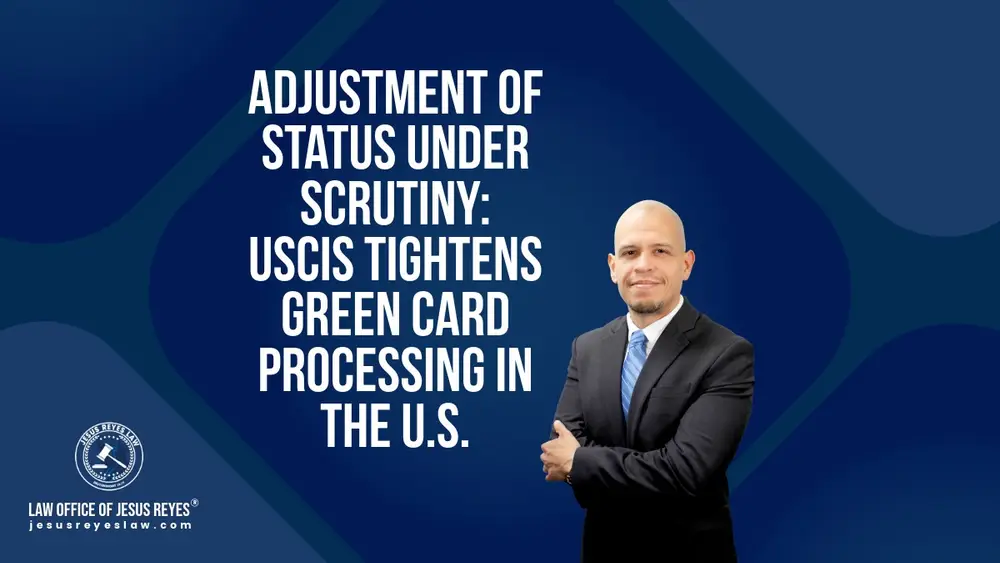
U.S. Citizenship and Immigration Services (USCIS) published an official memorandum strictly reinforcing the requirements to obtain permanent residency through adjustment of status inside the country.
The main change: consular processing as the general rule
Under the current guidance, foreign nationals who are temporarily in the country and wish to apply for a green card must, as a general rule, return to their country of origin for consular processing through the Department of State. Adjustment of status inside the U.S. would be reserved for extraordinary circumstances.
Who is most affected
The change especially impacts those who entered with nonimmigrant visas — tourism, study, or temporary work — or under the ESTA program, and seek residency through employment-based petitions. Although basic eligibility remains for many applicants, internally processed cases would be drastically reduced, and officers will evaluate each case individually.
How to strengthen your case under the new guidance
Documenting the good faith of your entry, maintaining valid status, avoiding inconsistencies between applications, and preparing solid evidence of eligibility is now more important than ever. A prior legal evaluation can determine whether your case qualifies for internal adjustment or whether to plan consular processing with waivers when applicable.
Every immigration case is different. If you have questions about your specific situation, we invite you to schedule a consultation with our office to receive personalized legal guidance.
Frequently Asked Questions
USCIS set consular processing in the country of origin as the general rule for those temporarily in the U.S., reserving internal adjustment for extraordinary circumstances.
Those who entered with tourist, student, or temporary work visas, or under ESTA, and seek residency through employment-based petitions.
Yes, in many cases. Officers evaluate each case individually, so strong evidence and a prior legal review of your immigration history are key.