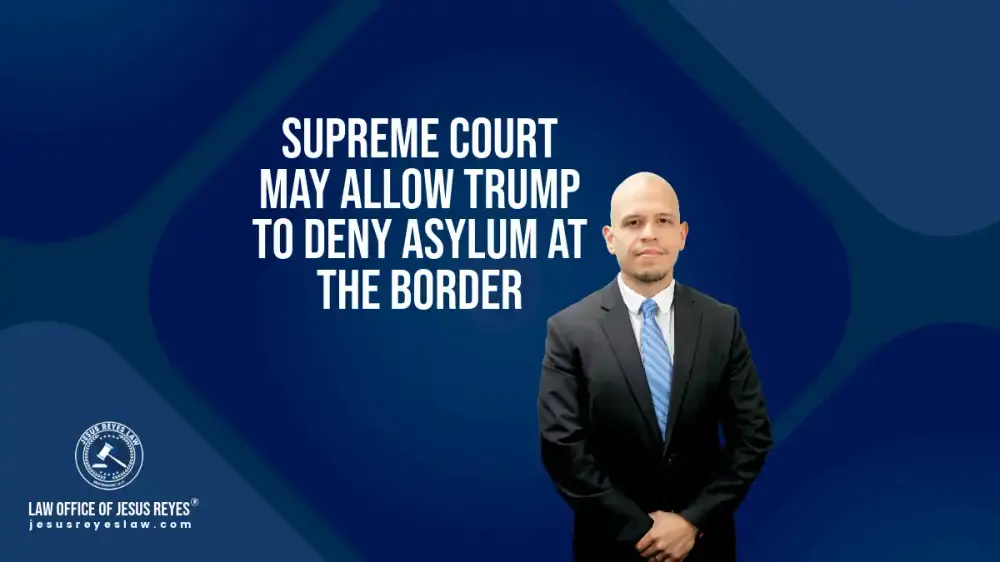
The U.S. Supreme Court is considering whether to allow border patrol agents to deny asylum claims at the border.
Recently, several justices on the Supreme Court have expressed their support for the Trump administration’s policy, which seeks to limit access to asylum for those who enter the country irregularly.
This measure implies that people who enter U.S. territory illegally could not only be denied entry but would also lose the ability to seek protection under the asylum process. Under the current policy promoted by the Executive Branch, the right to seek asylum is subject to legal entry regulations.
Key points of the current situation:
-
Judicial support: Several judges have indicated a favorable inclination toward the restrictions proposed by the government.
-
Impact on applicants: If this position is upheld, illegal entry would result in automatic disqualification from the asylum process.
-
Pending decision: A final ruling has not yet been issued, so a formal decision is expected in the coming months.
It is essential that anyone involved in an immigration process or planning to seek international protection be aware of their rights and stay informed about any legal changes the Supreme Court may decide to implement.