
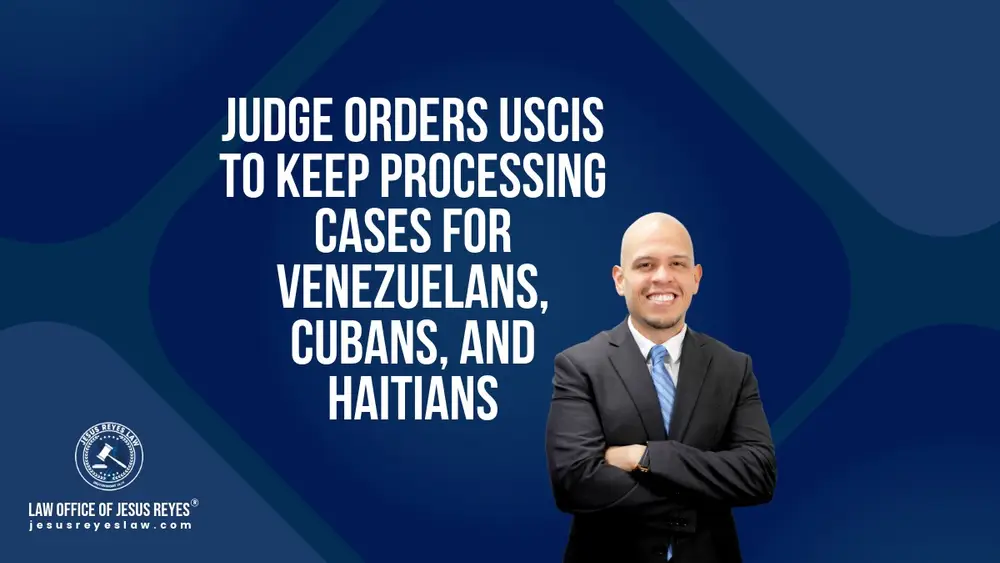
A federal judge ordered the government to continue processing immigration benefit applications filed by citizens of 39 countries, including Venezuela, Cuba, and Haiti. The decision is significant relief for thousands of families whose cases had been on hold for months without explanation.
What the court decision establishes
The court determined that the government cannot indefinitely suspend the adjudication of applications based solely on the applicant’s nationality. The processes that must continue include work permits, permanent residency applications, U.S. citizenship applications, and asylum cases.
Is this decision final?
Not necessarily. The government can still appeal, and immigration litigation of this kind usually goes through several stages. However, while the order is in effect, USCIS must continue adjudicating these cases — so this is a good time for applicants to check their case status and respond promptly to any requests for evidence.
What to do if your case was stalled
If your application had gone months without movement, check your status online, confirm that USCIS has your current address, and if the delay persists, discuss with an attorney options such as service inquiries, mandamus actions, or other legal tools to demand a decision.
Every immigration case is different. If you have questions about your specific situation, we invite you to schedule a consultation with our office to receive personalized legal guidance.
Frequently Asked Questions
The judge ordered the government to keep processing immigration applications from citizens of 39 countries, including Venezuela, Cuba, and Haiti, because cases cannot be suspended based solely on nationality.
Work permits, permanent residency (green card) applications, U.S. citizenship applications, and asylum cases.
Yes. But while the order stands, USCIS must keep adjudicating cases, so check your case status and respond promptly to any requests for evidence.